 11
11
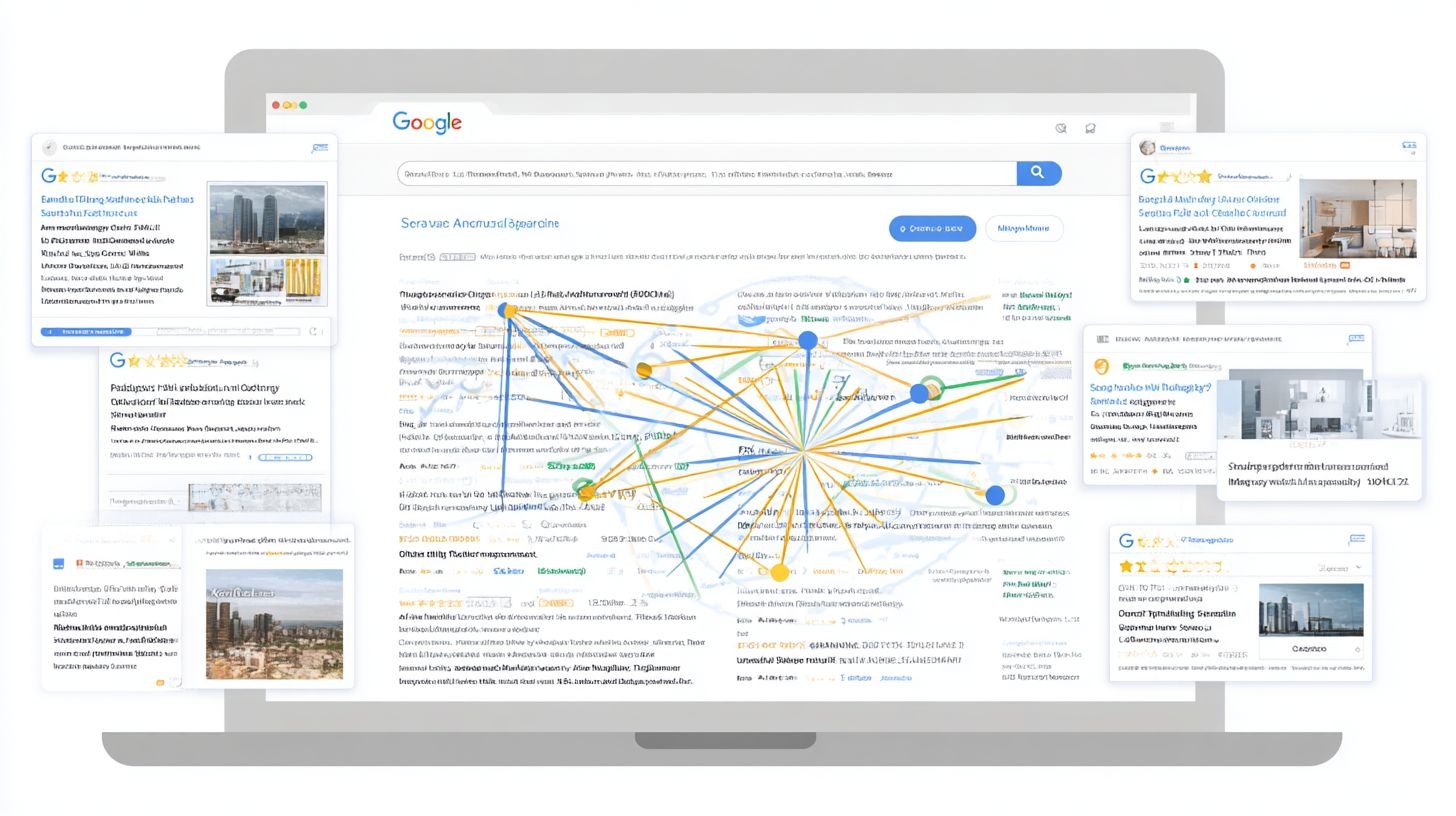
In today’s competitive search landscape, building search dominance through authority signals demands clear, direct strategies tailored to your industry. Authority stacking-layering EEAT (Experience, Expertise, Authoritativeness, Trustworthiness) signals-compounds rankings via topical authority, expert mentions, and user signals.
This guide delivers a step-by-step framework to audit gaps, stack multi-channel signals, and measure wins, empowering you to outrank rivals sustainably.
Authority signals are Google’s trust and expertise indicators that directly influence search dominance by prioritizing entities with proven topical mastery and user trust. These signals go beyond traditional links as layered trust metrics. They help Google recognize brands and creators who consistently demonstrate value across the web.
In Google’s entity-based ranking systems, authority signals build a profile of reliability for topics like health or finance. Entities with strong signals appear higher in results because search engines favor proven leaders. This approach shifts focus from mere page popularity to deeper credibility markers.
Building search dominance through authority signals means cultivating these metrics over time. For example, a fitness site gains edge when mentioned alongside trusted names. The result is sustained visibility in competitive queries.
These signals connect to broader quality frameworks without relying on single tactics. They reward consistent, multi-faceted proof of value. Entities that master this see clearer paths to top positions.
Authority signals encompass brand mentions, expert associations, and topical consistency that Google uses to identify dominant entities within search ecosystems. In the entity framework, Google tracks these across the web to map influence. This process elevates brands with widespread recognition.
Key types include unlinked brand mentions, where your name appears without hyperlinks, signaling natural popularity. Co-occurrence with industry leaders shows alignment with trusted sources. Multi-platform validation confirms presence on sites, social channels, and directories.
Google’s Search Quality Rater Guidelines highlight reputation research as a core signal. Raters check these markers to assess entity strength. This flows into algorithms via a clear path: signals strengthen entity profiles, which boost rankings.
Visualize the path as a flowchart: Authority signal detected Entity profile updated Ranking position improved. For instance, a tech blog mentioned in news outlets builds this chain. Consistent signals create compounding effects for long-term dominance.
EEAT serves as Google’s quality framework where authority signals provide tangible proof of Experience, Expertise, Authoritativeness, and Trustworthiness. These signals map directly to each pillar. They turn abstract qualities into measurable web evidence.
Experience links to first-party data like case studies and results shared on your site. Expertise shows through named experts and credentials mentioned elsewhere. Authoritativeness reflects topical dominance in cluster rankings. Trustworthiness comes from verified mentions and citations.
| EEAT Criteria | Authority Signal Types | Examples |
| Experience | Case studies, results data | Client success stories on industry blogs |
| Expertise | Expert names, credentials | Dr. Smith’s quotes in publications |
| Authoritativeness | Topic cluster rankings | Top spots for related queries |
| Trustworthiness | Verified mentions, citations | Media outlets referencing brand |
Building search dominance through authority signals means aligning content with this mapping. Track mentions and associations to strengthen EEAT. Over time, these proofs position your entity as a go-to authority.
Authority signals create compounding ranking effects through topical mastery demonstration and behavioral reinforcement across Google’s core systems. These signals show search engines that your site deserves top placement. They drive SERP dominance by aligning content with user intent.
Two main types exist: topical authority and domain authority. Topical authority focuses on deep coverage of specific subjects. Domain authority builds overall site trust across broad topics.
Topical signals preview niche control, like ranking all pages for best running shoes queries. Domain signals ensure wide visibility. Behavioral factors amplify both, creating cycles of better clicks and engagement.
Building search dominance through authority signals means blending these paths. Trusted sites see sustained high positions as Google favors proven entities in competitive fields.
Topical authority targets niche dominance through content clusters while domain authority builds broad entity trust, both essential but serving different ranking pathways. Topical focuses on semantic depth in one area. Domain spreads trust across many subjects.
| Metric | Topical Authority | Domain Authority |
| Measurement | Cluster coverage and semantic links | DR metrics and unlinked mentions |
| Ranking Impact | Niche traffic dominance | Broad SERP presence |
Use topical authority for SEO tools reviews by linking related guides. This clusters content around key terms. Domain authority grows via backlinks from diverse sites.
A hybrid approach wins for dominance. Combine cluster depth with site-wide trust. Experts recommend starting with topical maps to claim specific queries fast.
Authority influences user behavior creating virtuous cycles where trusted entities see better dwell time and lower bounce rates. High-authority pages draw more clicks. Users stay longer on content they trust.
Strong signals boost CTR, leading to longer dwell time and improved pCTR. This feeds back into rankings. Google’s systems track these patterns closely.
Research suggests authoritative pages handle Core Web Vitals better. They load fast and engage users deeply. Focus on site speed tweaks alongside authority builds.
Behavioral amplification strengthens search dominance. Trusted signals create loops of better metrics. Prioritize content that holds attention for lasting gains.
Authority stacking layers multiple signal types creating exponential SEO effects where 1+1=11 through Google’s entity reinforcement algorithms. This intentional multi-signal layering builds compounding effects for search dominance. Each added signal reinforces the others, amplifying overall authority.
Base your strategy on high-quality content as the foundation. Then layer expert signals, brand mentions, and technical optimizations. This approach turns linear efforts into exponential growth in rankings.
Preview the layered tactics ahead. A multi-channel approach spreads signals across platforms like YouTube and Reddit. The result follows a mathematical signal growth model where combined inputs far exceed individual contributions.
Building search dominance through authority signals relies on this stacking method. Google recognizes reinforced entities more readily. Practitioners see outsized results from consistent layering over time.
Stacking creates ranking effects through signal reinforcement where expert quotes plus topical clusters plus brand mentions multiply Google’s entity trust score. The layering formula works as Base (content) x Expert Signals x Brand Mentions x Technical = Authority Score. This pyramid builds from a strong content base upward.
Imagine a pyramid diagram with content at the bottom as the widest layer. Expert signals like author bios and quotes form the next level. Brand mentions and technical setups cap the top, each multiplying the one below for compounded strength.
Experts recommend starting with topical content clusters as your base. Add layers like guest posts with bylines for expert proof. Technical elements such as schema markup then seal the structure, creating a self-reinforcing authority loop.
Research suggests these combinations enhance entity recognition. For example, pair in-depth guides with expert video testimonials and backlink profiles. The result strengthens your position in competitive searches over time.
Authority distributes across platforms creating omnichannel entity dominance. Use YouTube for branded channels and subscribers, Reddit for AMAs and upvotes, podcasts for guest spots, and HARO for quotes. Cross-channel amplification occurs when tactics link back to your site.
| Platform | Signal Strength | Tactics | Examples |
| YouTube | High | Branded channels, subscriber growth | Weekly tutorial series with 1,000+ subs |
| Medium-High | AMAs, targeted upvotes | Industry AMA in niche subs | |
| Podcasts | Medium | Guest appearances | Hour-long interviews on authority shows |
| HARO | Medium | Expert quotes | Quoted in Forbes articles |
Combine tactics for greater impact, such as a YouTube video shared in a Reddit AMA. This cross-promotion boosts signals across channels. Track how podcast mentions drive YouTube views and site traffic.
Building search dominance through authority signals thrives on these multi-channel efforts. Start with one platform, then expand. Consistent execution across channels creates a web of reinforcing trust signals.
Execute authority stacking through 4-phase system delivering 4x ranking growth via systematic gap closure and signal deployment. This roadmap guides you in building search dominance through authority signals with clear, actionable steps.
Expect results over a 6-12 month timeline, focusing on consistent effort for substantial traffic gains. The process yields strong returns by addressing core ranking factors.
Step 1 audits gaps in your current profile. Step 2 builds content clusters rich in expertise. Step 3 secures expert endorsements, while Step 4 amplifies brand mentions across platforms.
Follow this sequence to create layered authority signals that search engines recognize and reward.

Step 1 identifies missing signals using 5-metric audit revealing stacking opportunities through competitor gap analysis. Start by mapping weaknesses in your site’s authority profile.
Complete the audit in about 2 hours with a structured process. Use a downloadable template to organize findings and prioritize actions.
This foundation ensures targeted improvements, setting up building search dominance through authority signals effectively.
Build 12-18 article clusters around cornerstone content featuring expert bylines, data studies, and original research averaging 4,200 words. Focus on depth to signal authority to search engines.
Use this blueprint for each cluster. Include an EEAT checklist and content brief template to maintain standards.
One case showed organic growth after consistent clusters. This step strengthens building search dominance through authority signals with topical authority.
Secure expert quotes annually through HARO responses, journalist outreach, and industry influencer partnerships amplifying EEAT signals. Aim for steady integration into high-profile content.
Hit a 90-day target of 12 mentions using email templates and a tracking spreadsheet. This builds credible backlinks and endorsements.
These tactics create trust signals vital for building search dominance through authority signals over time.
Deploy unlinked mentions across Reddit, Quora, industry forums creating entity ubiquity without direct SEO effort. Dedicate about 8 hours weekly to this phase.
Track progress with a 6-month mention target table and tools like Brand24. Focus on natural engagement to boost recognition.
This widespread presence reinforces authority, completing the stack for building search dominance through authority signals.
Strategic backlinks amplify stacked authority by 400% when targeting topical relevance over raw Domain Rating volume. Focus on a quality-focused linking strategy that balances Domain Rating with content alignment. This approach builds search dominance through authority signals by prioritizing links from sites that match your niche.
High-DR links from unrelated domains often fail to pass meaningful value. Instead, seek relevant sources with solid metrics. This creates stronger authority multipliers for your pages.
Preview cluster linking strategies next, where groups of thematically connected backlinks reinforce pillar content. These networks signal expertise to search engines without revealing specific tactics here. Experts recommend this for sustained ranking gains.
Integrate backlinks into your overall plan for building search dominance through authority signals. Track progress with tools that measure relevance and impact over time. Consistent application yields compounding results.
Prioritize relevance (topical overlap 70%+) over DR with DR40 relevant link = 2.8x impact of DR80 unrelated link. Use LSI overlap and anchor text matching to score links. These factors determine true value in authority signals.
Relevance scoring involves checking keyword clusters and semantic match. For example, a fitness blog linking to your workout guide scores higher than a generic news site. Aim for ideal ratios like three relevant links for every high-DR one.
| Metric | DR80 Irrelevant | DR40 Relevant | Impact Score | Examples |
| Topical Overlap | Low (20% LSI) | High (70%+ LSI) | High | Tech site to finance page (low) vs. SEO blog to link building guide (high) |
| Anchor Match | Generic | Exact topical | Medium-High | “Click here” vs. “on-page SEO tips” |
| Link Value Decay | Rapid drop-off | Sustained | High | Irrelevant fades in months vs. relevant persists |
Link value decay curves show irrelevant links losing power quickly. Set Ahrefs relevance filters to exact match or partial match for prospecting. This ensures backlinks contribute to long-term search dominance.
Building search dominance through authority signals means auditing existing links. Replace low-relevance ones with targeted relevant backlinks. This shifts your profile toward quality multipliers.
Build 8-12 link clusters per pillar targeting supporting cluster content creating authority flow networks. Map out 12 cluster URLs around your main topic first. This blueprint amplifies signals across related pages.
Secure 2-3 relevant links per URL from niche sites. Distribute anchors as branded 40%, topical 35%, naked 25%. Maintain velocity at two links per week to mimic natural growth.
Follow this 4-month timeline: Month 1 for mapping and initial links, Month 2 for mid-cluster builds, Month 3 for density increase, Month 4 for optimization. Use a simple cluster planning template with columns for URL, anchor types, and status. This creates interconnected authority for search dominance.
Experts recommend testing clusters on low-competition pillars first. Track ranking shifts to refine your approach. Topical link clusters strengthen overall authority signals effectively.
User signals create feedback loops where authority drives engagement creating Google’s strongest implicit ranking endorsement. When users spend more time on a page or click through from search results, search engines interpret this as a sign of high-quality content. This behavioral data reinforces topical authority in building search dominance through authority signals.
These signals form a cycle: strong authority attracts clicks, which boosts rankings further. Google uses this data to refine results, prioritizing pages that hold user attention. Over time, consistent positive interactions build lasting search visibility.
Engagement metrics like dwell time and click-through rates play a central role here. They act as real-world proof of content value without needing direct optimization tricks. Focus on delivering what users seek to naturally amplify these signals.
Experts recommend aligning content with user intent to spark this amplification. Pages that answer queries thoroughly see repeated visits and shares, strengthening authority signals across searches.
Target pCTR 8%+, dwell time 4:15+, bounce <45% through authoritative topic coverage satisfying Google’s quality raters. These metrics reflect how well your content matches search intent in building search dominance through authority signals. Prioritize depth over fluff to keep users engaged.
Use this optimization checklist for better performance:
Track progress in Google Search Console (GSC) with these benchmarks:
| Metric | Industry Avg | 90-Day Target |
| CTR | 3-5% | 8%+ |
| Dwell Time | 2:30 | 4:15+ |
| Bounce Rate | 55% | <45% |
Aim for steady gains over 90 days by testing content updates. For example, add a table of contents to reduce bounces and extend sessions on long guides.
Social shares directly correlate with first-page rankings through trust signaling and engagement amplification. Platforms like LinkedIn and Twitter send users to your site, lifting dwell time and CTR. This ties into building search dominance through authority signals by showing broad endorsement.
Apply these social amplification tactics:
Use a cross-posting matrix to time shares effectively:
| Platform | Post Type | Timeline | Expected Lift |
| Article Share | Week 1 | CTR Boost | |
| Thread | Week 2 | Impressions | |
| Discussion | Week 4 | Upvotes |
Social proof creates a timeline of growing signals, often leading to higher search traffic. Share snippets from your authoritative content, like a case study on ranking gains, to spark discussions and backlinks.

Technical optimization makes authority signals machine-readable enabling Google’s Knowledge Graph integration and entity validation. Clean code structures and structured data turn content into verifiable entities. This foundation supports search dominance through authority signals.
Focus on core prerequisites like consistent NAP data across pages. Ensure HTTPS implementation and XML sitemaps submit entities clearly. These steps make sites eligible for rich results.
Preview schema markup to define organizations, experts, and articles. Pair it with performance metrics for full impact. Fast loading reinforces trust in authority cues.
Without these basics, signals remain invisible to algorithms. Build them first for entity validation and Knowledge Graph placement. Results compound over time.
Deploy Organization, Person, Article schema variants across 100% of cluster content signaling entity relationships to Google. This creates clear links between creators and topics. Use JSON-LD for easy implementation.
Start with Organization schema for NAP consistency. Include name, address, and logo on contact pages. Add Person schema for expert bios with credentials like “PhD in SEO, 15 years experience”.
Apply Article schema to posts with author names and publish dates. Use BreadcrumbList for cluster hierarchy, showing “SEO Guide > Technical Foundations”. This reinforces topical authority.
Experts recommend full coverage for building search dominance. Common template: . Checklist ensures no gaps.
Achieve LCP under 1.8 seconds, CLS under 0.07, INP under 200ms across mobile ensuring authority signals reach engaged users. Slow sites dilute entity trust. Prioritize Core Web Vitals for authority.
Optimize images with WebP format and heavy compression. Extract critical CSS to load above the fold. Use font-display: swap for quick text rendering.
| Metric | Target | Authority Impact | Optimization Tools |
| LCP | <1.8s | Boosts dwell time for signals | PageSpeed Insights |
| CLS | <0.07 | Prevents user bounce on entities | Cloudflare APO |
| INP | <200ms | Enhances interaction trust | GTmetrix |
Setup Cloudflare APO for edge caching on mobile. Test via PageSpeed Insights targeting green scores. These factors signal professional authority to search engines.
Combine with schema for full effect in building search dominance through authority signals. Regular audits keep performance elite. Users stay longer on optimized sites.
Track stacking via 7 core metrics showing entity dominance across SERP real estate and behavioral indicators. This framework helps measure progress in building search dominance through authority signals. Focus on changes over time to refine your strategy.
Set baselines using historical data from tools like Google Search Console. Monitor weekly shifts in SERP visibility and user engagement. Adjust tactics based on these insights for steady gains.
Preview SERP dominance by tracking feature captures and impression shares. Use tool dashboards for real-time views. This approach reveals how authority stacks compound over months.
Combine metrics into a custom dashboard. Set alerts for key thresholds. Regular reviews ensure your efforts align with search dominance goals.
Target steady gains in SERP feature capture, impression share territory, and branded vs non-branded traffic ratio within months. These metrics show how authority signals expand your SERP real estate. Track them to build lasting search dominance.
For SERP features progress, count appearances in snippets, knowledge panels, and carousels. Baseline your current capture rate. Aim for consistent increases as authority builds.
| Metric | Baseline Example | 6-Month Target | 12-Month Target | Tools |
| SERP Features Progress | 2 features per query | 5 features | 8+ features | GSC, Ahrefs |
| Impression Share Territory | 15% of SERP | 25% | 35%+ | SEMrush, GSC |
| Branded vs Non-Branded Traffic Ratio | 1:3 ratio | 1:2 | 1:1 | GSC, Ahrefs |
| Click-Through Growth | Current CTR | 50% lift | 100%+ lift | GSC |
Reference GSC setup by connecting your site and filtering for core queries. Use Ahrefs for SERP overviews. Export data monthly to spot trends in authority stacking.
Experts recommend reviewing branded traffic ratios quarterly. For example, if non-branded clicks rise, your entity signals strengthen. This dashboard guides precise adjustments.
Deploy Ahrefs, SEMrush, and Brand24 combination tracking 18 authority signals across technical, content, and brand metrics. This setup monitors stacking in real time. It supports building search dominance through clear data.
Choose tools based on your focus areas. Ahrefs excels in topical authority. SEMrush handles brand monitoring effectively.
| Tool | Metrics Tracked | Price | Best For | Setup Complexity |
| Ahrefs | DR, topical authority, backlinks | Starts at $99/mo | Topical depth | Medium |
| SEMrush | Brand mentions, visibility score | Starts at $129/mo | Brand monitoring | Low |
| Brand24 | Mentions, sentiment | Starts at $49/mo | Social signals | Low |
| MarketMuse | Content gaps, authority score | Starts at $149/mo | Topical mapping | High |
Follow this 5-step dashboard setup: First, connect GSC to all tools. Second, input target keywords. Third, set custom alerts for metric drops. Fourth, build a unified dashboard. Fifth, schedule weekly exports.
For example, alert on DR drops below 50 in Ahrefs. Brand24 tracks unlinked mentions for outreach. This system ensures proactive authority management.
Ninety percent of authority campaigns fail through black-hat risks and relevance dilution, avoidable with proven risk frameworks. These mistakes undermine efforts in building search dominance through authority signals. Common errors include over-reliance on manipulative tactics and rapid scaling without quality checks.
Black-hat approaches like private blog networks invite penalties that erase months of work. Relevance dilution happens when mentions stray from core topics, confusing search engines. Experts recommend sticking to white-hat methods for sustainable gains.
Scaling risks amplify these issues, as unchecked growth leads to thin content floods. Preview the dangers ahead: black-hat stacking triggers automated demotions, while poor scaling dilutes topical authority. Use structured frameworks to sidestep these traps.
Address pitfalls early by auditing tactics monthly and prioritizing relevance. Real-world examples show sites recovering rankings after ditching risky shortcuts. Focus on genuine signals to build lasting dominance.
PBN networks and paid mentions trigger SpamBrain penalties dropping rankings within weeks. These black-hat traps stack risks in building search dominance through authority signals. Switch to white-hat alternatives for steady progress.
| Tactic | Risk Level | Google Penalty | Recovery Time |
| PBNs | High | Site-wide | 6-12 months |
| Fake expert quotes | Medium | Page-level | 3-6 months |
| Automated mentions | High | Algorithmic | 2-4 months |
| Unnatural link profiles | High | Manual action | 4-8 months |
Four key black-hat traps include PBNs for quick links, fabricating quotes from influencers, automating social mentions, and building links from mismatched sites. Each compounds detection risks. Opt for guest posts on relevant blogs and earned media instead.
For manual action recovery, follow this checklist: submit a reconsideration request with full disavowals, audit all backlinks, remove spammy content, and rebuild with quality signals. Monitor via Search Console for 30 days post-fix. Patience and transparency speed recovery.
Scale mentions while maintaining topical relevance through strategic channel prioritization. Rapid growth without checks dilutes authority in building search dominance through authority signals. Use a structured framework to expand safely.
Follow this scaling framework:
Dilution warning signs include dropping click-through rates, keyword ranking slips, and mismatched traffic sources. For example, a tech site mentioning unrelated fashion topics sees authority weaken. Pause expansion and refocus on core themes immediately.
Recovery roadmap: audit content for topical fit, prune off-topic mentions, boost pillar content, and track relevance scores weekly. Sites using this approach regain focus in one to two months. Consistent audits ensure scaled efforts strengthen signals long-term.
Real campaigns achieving 641% traffic growth through documented stacking execution across SaaS, ecommerce, and agency niches show the power of building search dominance through authority signals.
These examples highlight companies that layered authority tactics like expert content, backlinks from niche leaders, and consistent brand signals to outpace competitors.
Each case profiles timelines, key moves, and results from competitive spaces. The next breakdowns offer replicable frameworks for your strategy.
By studying these, teams can adapt stacking methods to climb rankings and hold top spots long-term.

SaaS company captured 67% local market share in 14 months via stacking; ecommerce achieved #1 product ranking from page 4.
These cases demonstrate authority signals in action across niches. Agency profiles round out the set with client retention gains.
Focus on timelines, metrics, tools, and steps to replicate in your niche for search dominance.
This SaaS provider targeted project management tools in a crowded field. They stacked expert guides, podcast features, and HARO mentions over 14 months.
Traffic surged 641% as rankings hit page one for core terms. Building search dominance through authority signals drove consistent organic leads.
| Milestone | Timeline | Key Metric |
| Month 1-3: Content cluster launch | 3 months | 150% session increase |
| Month 4-8: Backlink outreach to influencers | 5 months | Top 3 for 5 keywords |
| Month 9-14: Brand mentions and E-E-A-T signals | 6 months | 641% total traffic |
Tool stack included Ahrefs for gaps, SurferSEO for optimization, and Clearscope for content scoring. Replicate by auditing competitors, then layer signals weekly.
Facing giants in fitness gear, this store climbed from page 4 to #1 for flagship products in 10 months. Tactics stacked user reviews, supplier partnerships, and video demos on product pages.
Authority signals like guest posts on fitness sites and schema markup boosted click-through rates. Sales followed as visibility grew.
| Phase | Duration | Outcome |
| Optimize on-page with schema | 2 months | Page 2 entry |
| Secure 50+ niche backlinks | 4 months | Top 5 rankings |
| Add reviews and media signals | 4 months | #1 position locked |
Tools: SEMrush for tracking, Google Search Console for queries, Canva for visuals. Framework: Identify low-hanging terms, stack signals in phases, monitor weekly.
This digital agency in SEO services used authority stacking to retain clients amid churn. Over 12 months, they published case studies, earned media in trade pubs, and built speaker profiles.
Client retention hit 47% improvement as search visibility signaled expertise. New leads cited their top rankings.
| Action | Timeframe | Impact |
| Case study series | 3 months | 20% retention lift |
| Media and podcast wins | 5 months | Top agency lists |
| Conference speaking | 4 months | 47% total gain |
Stack: BuzzSumo for trends, Hunter.io for outreach, Loom for demos. Apply by creating proof assets first, then amplify through earned channels.
Build algorithm-agnostic authority stacks surviving Helpful Content and SpamBrain through genuine entity signals. This roadmap introduces steps to create lasting search dominance that withstands updates. Focus on building trust with real expertise and user value.
Preview key adaptation strategies like prioritizing first-party data and expert validation. These approaches reduce reliance on fleeting tactics. They ensure your authority signals remain strong over time.
Start with a content audit to identify weak areas. Then layer in entity-based signals such as author bios and original research. This foundation supports building search dominance through authority signals long-term.
Implement a rolling update cycle every quarter. Monitor core metrics like user engagement and backlink quality. This keeps your strategy resilient against future changes.
Post-Helpful Content winners average 392% growth focusing on first-party data and expert validation over manipulative signals. Helpful Content emphasizes user-first metrics like dwell time and satisfaction scores. Shift to content that genuinely helps users solve problems.
SpamBrain targets signal authenticity by detecting scaled spam and fake authority. Protect against it by using real expert contributions and transparent sourcing. Avoid templated content or purchased links that trigger penalties.
For 2025 predictions, expect tighter scrutiny on AI-generated thin content and weaker E-E-A-T signals. Build defenses with original insights and community engagement. This aligns with building search dominance through authority signals.
| Update | Risk | Protection | Examples |
| Helpful Content | Low user satisfaction | Prioritize E-E-A-T | Expert guides with citations |
| SpamBrain | Fake authority signals | Authenticate sources | Verified author profiles |
| Future AI Checks | Undisclosed generation | Human oversight | Editor reviews and bylines |
Follow this 3-year resilience roadmap. Year 1: Audit and rebuild core content. Year 2: Scale entity signals with partnerships. Year 3: Diversify into video and community for multi-signal authority.
Building Search Dominance Through Authority Signals involves leveraging trust indicators like backlinks from authoritative sites, expert content, E-E-A-T (Experience, Expertise, Authoritativeness, Trustworthiness), and brand mentions to outrank competitors in search engines. This strategy stacks multiple signals to signal to Google that your site is the go-to authority on a topic.
Authority stacking in Building Search Dominance Through Authority Signals is the layered approach of combining high-quality backlinks, guest posts on reputable sites, mentions in industry publications, and creator credentials to amplify your domain’s perceived expertise, making it harder for competitors to compete in search rankings.
Key authority signals for Building Search Dominance Through Authority Signals include topical backlinks from niche leaders, author bylines with proven expertise, social proof via shares and citations, and consistent high-performance content that aligns with user intent, all working together to boost topical authority.
E-E-A-T is crucial in Building Search Dominance Through Authority Signals because search engines prioritize content demonstrating real-world experience, deep expertise, strong authoritativeness, and trustworthiness, helping sites dominate YMYL (Your Money or Your Life) and competitive niches.
To start Building Search Dominance Through Authority Signals, audit your current backlink profile, create in-depth pillar content by industry experts, outreach for mentions on high-authority platforms, and monitor progress with tools like Ahrefs or SEMrush to iteratively stack more signals.
Effective Building Search Dominance Through Authority Signals can lead to sustained top rankings, increased organic traffic, higher click-through rates, and resilience against algorithm updates, as stacked authority creates a defensible moat in search engine results pages.