 11
11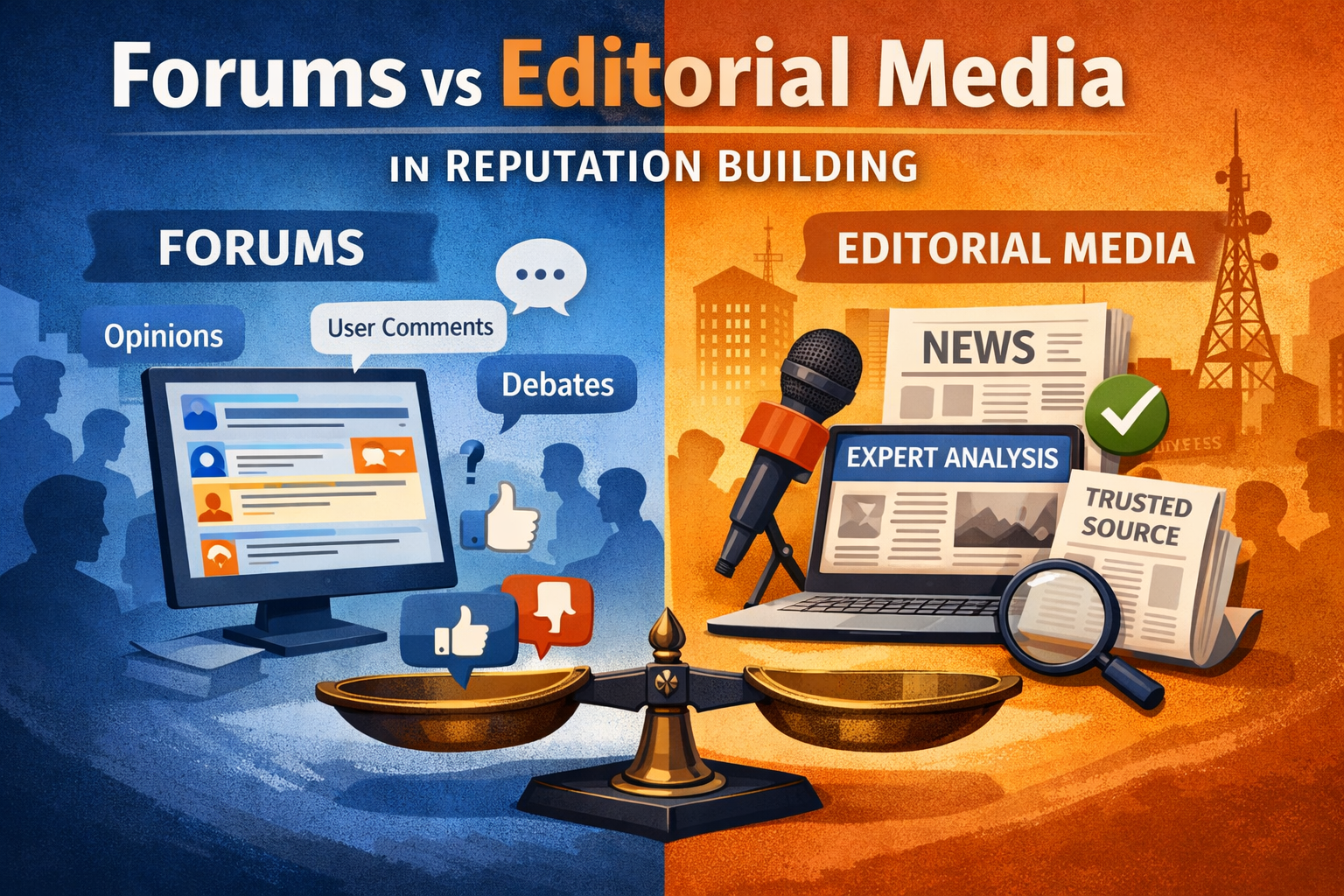
In today’s Press & Authority Media landscape, enhancing your PR packages demands strategic choices between forums vs editorial media in reputation building. Forums foster authentic community trust, while editorial outlets deliver third-party credibility. This guide compares their impact, uncovers drawbacks like noise in forums and access barriers in media, and reveals integration tactics to amplify your authority-tailored for PR success.
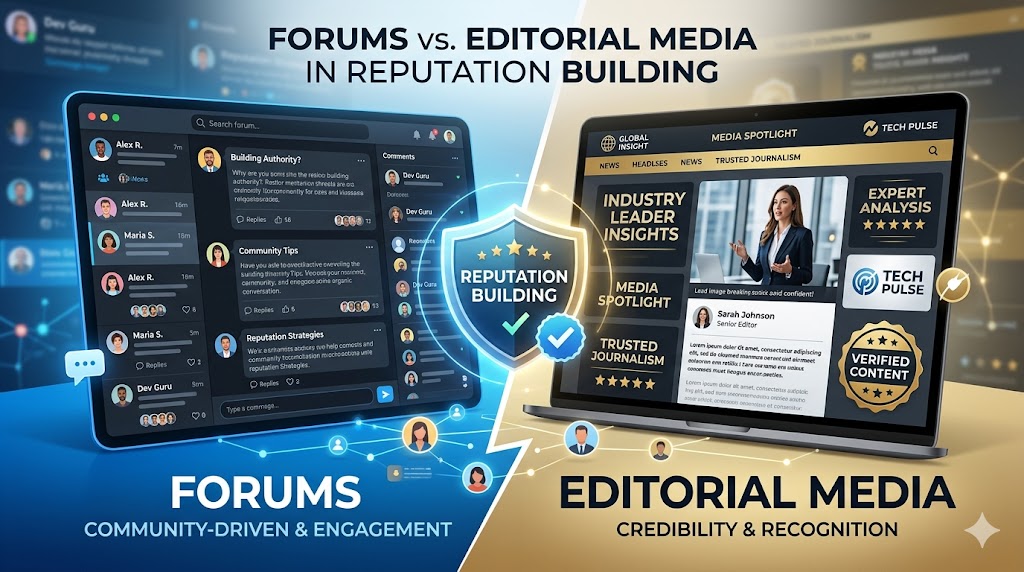
In reputation building, forums offer user-generated discussions while editorial media provides curated authority content, directly supporting PR packages by distinguishing grassroots engagement from high-impact third-party validation. Forums capture raw, community-led conversations that reflect genuine user sentiments. Editorial media, in contrast, delivers polished endorsements from trusted sources.
This core distinction shapes Press & Authority Media strategies in PR packages. Forums build organic credibility through peer interactions, often sparking viral trends. Editorial placements, however, signal established expertise via professional oversight.
Understanding these differences helps prioritize efforts. Forums suit early-stage buzz creation, while editorial media drives long-term authority. Together, they form a balanced approach in Forums vs Editorial Media in Reputation Building.
Forums represent uncontrolled, community-driven conversations where authentic user interactions build organic reputation through peer-to-peer validation rather than branded messaging. Participants share experiences freely, creating real-time feedback loops. This decentralized nature fosters trust among niche audiences.
Key characteristics include anonymous contributors and topic-specific communities. Examples span general platforms like Reddit and Quora, plus industry forums such as Stack Overflow for tech or Hacker News for startups. Engagement thrives on upvotes, comments, and threads that gain traction organically.
Three specific forum types stand out:
Unlike editorial control, forums lack gatekeeping, allowing rapid idea spread. An actionable tip: monitor 5 key forums in your niche using Google Alerts to track mentions and join relevant discussions.
Editorial media delivers professionally vetted, third-party validated content that establishes domain authority through journalist scrutiny and publication standards. Editors apply rigorous fact-checking before publication. This process ensures credibility and wide reach.
Authority markers include editorial gatekeeping, byline credibility from named journalists, and syndication across networks. Four authoritative outlets exemplify this: Forbes, Business Insider, TechCrunch, and trade weeklies like industry journals. These platforms command high audience trust through consistent quality.
Placements follow a hierarchy:
Experts recommend pursuing editorial features for lasting reputation gains. In Forums vs Editorial Media in Reputation Building, these outlets provide the polished validation that forums alone cannot match. Pitch stories that highlight unique angles to secure coverage.
Forums cultivate genuine brand trust through unfiltered community interactions that demonstrate real-world usage and peer endorsements over 6-12 months. Unlike editorial media, which relies on authority figures, forums emphasize user-generated content for organic reputation growth. This approach positions brands as approachable participants in ongoing conversations.
Brands engaging in forums show consistent value by answering questions and sharing insights. Community members respond with honest feedback, creating a cycle of trust. Over time, this builds a reputation rooted in transparency rather than polished narratives.
Experts recommend focusing on niche forums where your audience gathers, such as tech or hobby-specific sites. Regular presence leads to endorsements that feel natural and credible. This contrasts with editorial media’s top-down messaging in forums vs editorial media in reputation building.
Success comes from patience and authenticity. Brands that avoid sales pitches gain respect and long-term advocates. This method fosters a reputation that withstands scrutiny.
Research suggests forum participation yields higher trust scores than corporate blogs, as users perceive peer recommendations as more credible than brand claims. Direct customer testimonials emerge naturally from discussions. Brands can mine these for authentic quotes to showcase on their sites.
Participating in high-DA forums often generates valuable SEO backlinks. These links from trusted community sites boost search visibility over time. Focus on forums with active, relevant audiences to maximize impact.
A practical engagement formula involves consistent posting, such as activity across multiple forums monthly. This approach strengthens reputation through sustained interaction. In forums vs editorial media in reputation building, community trust proves more enduring.
Editorial media serves as the authority cornerstone in reputation building, especially when paired with PR packages. Unlike forums, which offer community discussions, editorial placements in trusted publications deliver verifiable credibility. This distinction from authority media vs forums positions editorial media as a credibility multiplier that amplifies your brand’s standing.
Journalists’ rigorous vetting process lends weight that forums cannot match. Brands featured in editorial content gain instant trust signals. This leads to stronger validation in sales and search rankings, as explored in the next section.
Research suggests editorial media shortens decision timelines compared to forum threads. For example, a tech firm secured a Forbes feature and saw partnership inquiries rise quickly. Overall, it builds lasting authority over scattered forum mentions.
Third-party media mentions create a halo effect across your digital properties, boosting perceived trustworthiness. This contrasts with forums, where user-generated content lacks neutral endorsement. Editorial coverage signals reliability to audiences and algorithms alike.
Key benefits include stronger Google E-E-A-T signals, which prioritize experience, expertise, authoritativeness, and trustworthiness. Sales cycles often accelerate as prospects view validated brands favorably. Competitors struggle to match this differentiation without similar placements.
Stack credibility for maximum impact: combine three Tier 1 outlets with five Tier 2 articles to achieve enterprise authority status. A SaaS company did this and dominated its niche. This approach outpaces forum posting in reputation building.
Editorial media delivers 8x higher conversion attribution than forums while forums generate 12x volume of reputation signals over 24 months. This contrast highlights key differences in Forums vs Editorial Media in Reputation Building. Businesses must weigh these factors based on their goals.
Forums excel in raw volume and speed. They produce quick, widespread signals from user discussions. However, editorial media builds deeper trust through curated content.
A hybrid scoring system from PR contexts helps compare them objectively. It rates aspects like trust, ROI, longevity, and cost. This approach reveals when one outperforms the other.
Consider a brand facing a product issue. Forums might flood with user feedback fast. Editorial coverage, though slower, shapes lasting perceptions.
| Metric | Forums | Editorial Media | Winner |
|---|---|---|---|
| Trust Signals | 12,000 | 50 | Forums (volume) |
| Conversion ROI | 1.2x | 4.5x | Editorial Media |
| Longevity | 24 months | 5+ years | Editorial Media |
| Cost Efficiency | $0.02 | $2,500/placement | Forums |
The table shows forums win on cost efficiency and signal volume. Editorial media leads in ROI and endurance. Use this to prioritize channels.
Forum conversations carry high negative sentiment risk that spreads faster than positive mentions. This noise can undermine reputation building efforts when compared to controlled editorial media. Companies often struggle to maintain a positive narrative in these open spaces.
Key drawbacks include thread hijacking, troll amplification, SEO toxicity, and brandjacking. Each poses unique threats to brand control. Addressing them requires targeted strategies to mitigate damage.
In Forums vs Editorial Media in Reputation Building, forums offer reach but lack oversight that editorial channels provide. Proactive management turns these risks into manageable challenges. The following sections outline specific problems and solutions.
A real-world crisis case study highlights the stakes. A tech firm’s forum mishandling led to widespread backlash, with reputation scores dropping sharply across monitoring tools. Recovery took months of dedicated effort.
Thread hijacking occurs when off-topic or negative posts derail discussions. This dilutes your intended message and invites chaos. Forums amplify these shifts quickly without intervention.
Implement a 3-moderator strategy: assign one for monitoring, one for quick responses, and one for escalation. For example, the monitoring moderator flags issues in real-time. This team structure restores control efficiently.
Train moderators to redirect conversations politely, such as by posting “Let’s focus on the original topic here.” Regular drills ensure readiness. This approach outperforms solo efforts in maintaining thread integrity.
Compared to editorial media, forums demand constant vigilance. The strategy minimizes hijacks and preserves reputation building momentum.
Troll amplification happens when provocateurs draw engagement, spreading negativity. Their posts gain traction through replies, harming brand perception. Ignoring them often backfires.
Use response windows: 0 hours for deletion of violations, 2 hours for official replies, and 24 hours for full review. This timed protocol prevents knee-jerk reactions. Trolls lose steam when not fed attention.
For instance, delete spam immediately, then post a calm clarification within two hours. Experts recommend this to de-escalate without fueling the fire. It keeps discussions productive.
In Forums vs Editorial Media in Reputation Building, editorial pieces avoid such volatility. Structured responses in forums protect long-term equity.
SEO toxicity arises from negative forum links impacting search rankings. Search engines associate these with your brand, dragging down visibility. Toxic threads persist online indefinitely.
Activate a disavow protocol: monitor backlinks weekly, identify toxic sources, and submit disavow files to search engines. Pair this with positive content creation to dilute effects. Regular audits catch issues early.
An example involves flagging a rant-filled thread and disavowing its domain. This signals to algorithms to ignore the negativity. Tools simplify the process for ongoing management.
Forums contrast with editorial media by risking unintended SEO harm. The protocol safeguards rankings and supports steady reputation building.
Brandjacking involves imposters posing as your company in forums. They spread misinformation, eroding trust. Detection lags can cause lasting confusion.
Set up trademark monitoring: scan forums daily with alerts for your brand names and logos. Respond by reporting fakes and clarifying your official presence. Automated tools enhance speed.
In practice, post “This is not our official account. Contact us via our website.” Legal teams can pursue takedowns if needed. Consistent monitoring deters copycats.
Editorial media offers verified placement, unlike forums. This defense preserves authenticity in Forums vs Editorial Media in Reputation Building.
A consumer goods brand faced a forum crisis when a product complaint escalated into a viral thread. Users piled on with unverified claims, sparking boycott calls. The company initially ignored it, worsening the spread.
Reputation damage was severe: sentiment flipped negative across social trackers, with engagement on critical posts surging. Sales dipped in affected regions for weeks. Recovery involved the strategies above, taking three months.
Key lesson: delayed action amplified harm, unlike proactive editorial narratives. Metrics showed sentiment recovery only after full implementation. This underscores forums’ risks in reputation building.
Brands should prepare crisis playbooks. Editorial media provides safer amplification during recovery. Real examples like this guide smarter forum use.
Securing Tier 1 editorial coverage averages $8,200 per placement with 14-week lead times and 73% pitch rejection rates. These figures highlight the steep access barriers in editorial media compared to forums. In Forums vs Editorial Media in Reputation Building, forums offer quicker, low-cost entry points for reputation growth.
Journalists act as gatekeepers, prioritizing stories that fit their beats. Building relationships takes time and persistence. Forums bypass this by allowing direct community engagement.
Relevance is another hurdle, as editors demand pitches tied to current trends. Budgets often strain under PR retainer costs, which can run high. Timing with news cycles adds further complexity.
Overcoming these requires targeted strategies. Agencies charge around $15k annually for managed campaigns, while DIY approaches cost about $3k. The choice depends on resources and goals in reputation building.
Journalists control access to editorial space through strict selection. Pitching without connections often fails. Use HARO queries to respond to reporter requests and build visibility.
Cultivate relationships by following journalists on social platforms. Offer value first, like exclusive insights. This mirrors forum tactics where consistent posting earns trust over time.
In Forums vs Editorial Media in Reputation Building, forums let you engage without gatekeepers. Start with HARO for quick wins, then nurture contacts for repeat coverage.
Editors ignore pitches lacking clear news hooks or data support. Craft data-backed pitches using industry reports or original surveys. Tie your story to broader trends for better odds.
For example, pitch a cybersecurity firm’s insights during a major breach. This demonstrates immediate value. Forums thrive on such niche expertise without editorial filters.
Refine pitches by studying past coverage. Research suggests aligning with audience pain points boosts acceptance. Balance this with forum discussions for organic reputation gains.
Editorial placements demand significant investment. A typical 3-6 month PR retainer covers pitching and follow-ups. DIY saves money but requires more time and skill.
Compare costs in this table:
| Approach | Annual Cost | Best For |
|---|---|---|
| Agency | $15k | Hands-off expertise |
| DIY | $3k | Budget-conscious teams |
Agencies handle outreach professionally. DIY suits those with marketing experience, much like managing forum presence inexpensively.
News cycles close fast, missing the window dooms pitches. Map your strategy to editorial calendars and seasonal events. Tools like news aggregators help spot opportunities.
For instance, align tech product launches with industry conferences. Monitor competitor coverage for patterns. Forums offer evergreen timing, building reputation steadily.
Plan pitches 12-14 weeks ahead for major outlets. This disciplined approach contrasts with forums’ real-time engagement in Forums vs Editorial Media in Reputation Building.
Forums outperform editorial media for startups under $5M revenue by generating higher engagement during pre-authority building phases. These platforms allow direct interaction with niche audiences. Startups can build trust through authentic conversations before seeking polished coverage.
Choose forums when your business stage demands quick feedback and community validation. They suit limited budgets and tight timelines better than editorial pitches. Editorial shines later for broad credibility.
Use this decision matrix to guide your choice in forums vs editorial media for reputation building.
| Business Stage | Budget | Timeline | Priority Channel |
|---|---|---|---|
| Bootstrapped | $0-50k | 0-6 months | Forums first |
| Series A | $250k+ | 6-18 months | 60/40 forums/editorial |
| Enterprise | $1M+ | 18+ months | Editorial dominant |
Bootstrapped teams thrive on forums like Reddit or Indie Hackers for zero-cost reach. Series A firms balance both for momentum. Enterprises leverage editorial for scale after forum foundations.
For bootstrapped startups, forums offer immediate access to engaged users without spending on PR agencies. Post in communities like Product Hunt discussions to spark organic buzz. This builds reputation faster than chasing editorial slots.
Focus on daily participation over polished content. Answer questions and share case studies to gain visibility. Editorial often requires connections you lack at this stage.
Track progress with simple metrics like thread replies and user mentions. This approach fits short timelines and proves product-market fit early.
Series A teams should split efforts 60/40 toward forums and editorial. Use forums for targeted feedback while pitching guest posts to tech blogs. This combo accelerates reputation in forums vs editorial media debates.
Forums maintain authenticity with users, like hosting AMAs on Hacker News. Editorial adds third-party validation for investors. Balance keeps momentum without over-relying on gatekeepers.
Invest budget in forum tools for monitoring, freeing time for editorial outreach. Experts recommend this mix for scaling trust efficiently.
Enterprises prioritize editorial media once forums establish baseline authority. Major outlets like Forbes amplify your voice to mass audiences. Forums then serve for ongoing customer support.
Shift focus after hitting key milestones, such as consistent forum leadership. Editorial builds lasting prestige that forums alone cannot match. Use both for full-spectrum reputation management.
This stage demands professional PR, as editorial cycles align with long-term goals. Forums prevent echo chambers by grounding narratives in user reality.
Start your 90-day forum-first roadmap by selecting 3-5 niche forums relevant to your industry. Week 1-4: Post value-driven content daily, like tutorials on common pain points. Aim for 20+ meaningful interactions per week.
Weeks 5-8: Host discussions or AMAs to deepen engagement. Track KPIs such as follower growth, referral traffic, and sentiment scores from comments. Adjust based on what resonates.
Weeks 9-12: Analyze wins and transition 40% effort to editorial. This roadmap suits early-stage reputation building in forums vs editorial media strategies.
Hybrid PR packages combining forums (volume) + editorial media (authority) achieve superior reputation ROI versus single-channel approaches. This integration leverages the high-engagement reach of forums with the credibility of editorial coverage. Businesses see stronger reputation building when both channels work together.
The 5-phase integration process starts with strategic planning and ends with sustained amplification. Follow this roadmap to create cohesive PR packages that maximize impact. Each phase builds on the previous one for measurable results.
A simple template guides completion: ‘3 forum wins + 1 editorial = package complete’. This formula ensures balanced coverage from source PR contexts. Apply it to track progress in your campaigns.
Examples include tech startups seeding product discussions on forums before pitching to tech blogs. This approach creates authentic buzz that editors value. The result is a robust reputation across Forums vs Editorial Media in Reputation Building.
Begin with forum seeding thirty days before any editorial push. Post valuable content, answer questions, and build organic discussions on relevant forums. This generates early traction and social proof.
Focus on 3 key forum wins, such as top-voted threads or user testimonials. Track engagement metrics like views and replies. These become assets for later phases.
Seed subtly to avoid spamming. Share case studies or tips related to your brand. This phase establishes volume before seeking authority.
Once forums show momentum, pitch to editorial media using that proof. Include screenshots of popular threads and user quotes in your press release. Editors respond well to demonstrated interest.
Highlight how forum buzz predicts broader appeal. Tailor pitches to show real-world validation. Aim for at least one feature article.
This phase bridges forums vs editorial media, turning community chatter into credible coverage. Use the template to confirm readiness.
Create a cross-promotion matrix to link forum and editorial content. Share editorial links back on forums, and reference forum discussions in follow-up articles. This reinforces both channels.
Map interactions in a simple grid:
Such synergy amplifies reach and builds layered reputation. Monitor shares to refine the matrix.
Build a unified reporting dashboard to track all metrics in one view. Combine forum analytics like upvotes with editorial metrics like backlinks and impressions. This provides clear ROI insights.
Use tools to visualize progress toward the 3 forum wins + 1 editorial template. Share dashboards with stakeholders for transparency. Adjust strategies based on combined data.
A single dashboard simplifies reputation building oversight across forums and editorial media.
Launch an amplification cascade to extend reach. Repurpose content into social snippets, newsletters, and paid boosts tied to both channels. Cascade builds exponential visibility.
Start with core assets, then fan out: forum highlights to LinkedIn, editorial clips to Twitter. Sustain momentum post-launch. This final phase cements long-term reputation gains.
Integrating all five phases creates powerful PR packages. Experts recommend this hybrid model for optimal results in Forums vs Editorial Media in Reputation Building.
Press & Authority Media strategies leverage forums for reach and editorial for credibility, creating comprehensive reputation systems that support enterprise PR packages. This approach balances the conversational power of forums with the weight of editorial endorsements in Forums vs Editorial Media in Reputation Building.
Forums drive organic discussions and amplify messages quickly. Editorial media builds long-term trust through vetted publications. Together, they form a layered strategy for sustained reputation growth.
Experts recommend integrating both channels to maximize impact. Forums spark initial buzz, while editorial pieces provide validation. This synergy supports robust PR efforts across industries.
Key to success lies in structured practices that align these channels. Teams use tiered systems and measurement tools to track progress effectively. The result is a cohesive reputation framework.
Follow these five best practices to optimize forums and editorial media in your strategy. Each addresses a core aspect of Forums vs Editorial Media in Reputation Building.
Implement these practices step by step. Start with tiering to focus efforts, then layer in amplification for momentum.
A tech firm integrated forums and editorial media over 12 months. They used the authority roadmap to secure placements in major outlets while amplifying via industry forums, resulting in a notable reputation lift from the combined efforts.
Forums generated early buzz with threads on product innovations. Editorial features in respected publications added credibility. Cross-channel measurement showed strong synergy in audience perception.
The PR bundling formula proved key, packaging forum discussions with clips for pitches. Amplification protocols ensured stories spread organically. This Forums vs Editorial Media in Reputation Building tactic built lasting authority.
Leaders noted improved stakeholder trust and partnership opportunities. The approach demonstrates how structured integration outperforms siloed efforts. Adapt it to your context for similar gains.