 11
11
Master Controlled Narrative Building in Search and AI to safeguard your brand‘s story. In today’s AI-driven landscape, tools like ChatGPT, Gemini, and Perplexity amplify unwanted narratives, undermining SEO dominance. Our Link Suppression service aligns perfectly, enabling precise narrative control through strategic search manipulation. Discover proven tactics, from backlink engineering to real-time AI monitoring, ensuring your brand dictates the conversation.
Controlled narrative building shapes brand perception across search engines and AI platforms like ChatGPT and Gemini by strategically curating the algorithmic footprint visible to LLMs and SERPs.
This approach combines proactive entity SEO and defensive SEO, much like Link Suppression services. Brands create machine-readable content to ensure authoritative representation in AI synthesis.
The core goal focuses on aligning digital signals for consistent visibility. For example, structured data helps LLMs pull accurate brand details during evaluation queries. This builds trust in AI search outputs.
Next, explore the key principles that guide this process. Understanding these sets controlled methods apart from natural web evolution.
Controlled narrative building defines the intentional construction of a brand’s digital identity through structured data, third-party corroboration, and optimized sources that LLMs synthesize for evaluation queries.
It relies on five key principles for effective implementation.
“AIO positioning is about owning your narrative before AI does it for you,” says Myriam Jessier. Brands apply these by auditing sources and adding machine-readable content like schema markup.
Unlike organic narrative formation driven by uncoordinated consumer interactions and third-party sources, controlled narrative building proactively engineers the brand’s representation in AI search outputs.
Organic efforts emerge slowly from scattered mentions, while controlled methods curate authoritative signals. This shift from traditional SEO to Kalicube’s entity SEO boosts reliability in LLMs.
| Aspect | Organic | Controlled | Examples |
| Source Control | Scattered across forums and reviews | Curated high-authority sites | Consumer posts on Reddit vs. optimized Wikipedia entries |
| Speed | Slow evolution over years | Real-time adjustments | Months of backlinks vs. instant structured data updates |
| Consistency | Variable and conflicting | Authoritative and aligned | Mixed Yelp reviews vs. unified knowledge graph data |
| Visibility | SERPs dependent | Knowledge graph dominant | Page one rankings vs. direct ChatGPT answers |
Brands gain reputation control by focusing on these differences. Defensive SEO protects against negative signals, ensuring positive synthesis in Gemini and beyond.
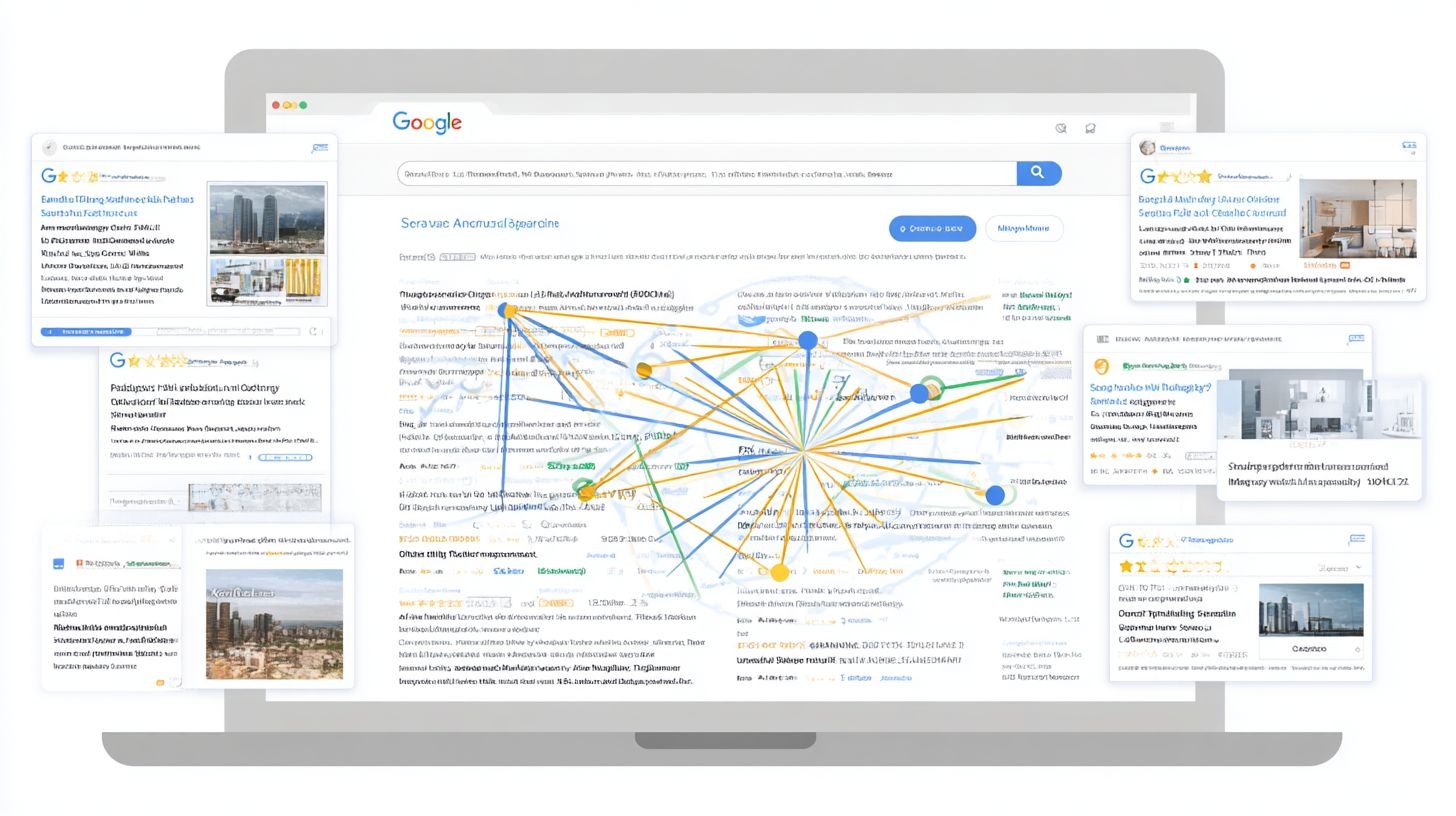
Controlled narrative building manipulates SERP composition and knowledge graph entries through targeted SEO techniques and link suppression to dominate brand visibility in Google AI and traditional search. Enterprise AIO influences search engine mechanics by prioritizing trusted entity representations in AI-driven results. This approach ensures consistent brand narratives across platforms like ChatGPT and Gemini.
Search engines rely on algorithms that synthesize structured data from authoritative sources to build real-time responses. Link suppression integrates as a core mechanism, quietly reducing unwanted signals without aggressive tactics. It sets the stage for elevating controlled content in SERPs and LLMs.
Brands use this to shape consumer perception through optimized entity SEO, as experts like Jason Barnard and Myriam Jessier from Kalicube emphasize. Defensive SEO counters competitive noise, fostering trust and expertise signals. The result is stronger digital visibility in AI search environments.
Monitoring tools like Semrush help track algorithmic footprint, allowing adjustments for sustained narrative control. This process aligns with how modern search systems evaluate sources for relevance and authority.
Algorithmic ranking manipulation employs structured data and entity SEO to elevate controlled sources in Google’s Knowledge Graph and SERPs over competitive noise. These techniques focus on machine-readable optimization for AI synthesis in LLMs. Brands gain dominance by aligning with search evaluation criteria.
Follow these numbered steps for effective implementation:
The full process typically takes 4-6 weeks, depending on content volume. A common mistake is ignoring mobile-first indexing, which can undermine visibility in AI search results.
For example, apply schema to a brand’s about page with Organization markup including founder details. This positions the narrative ahead of competitors, improving reputation management through consistent digital representation.
Link suppression directly counters harmful backlinks by diluting competitor signals and neutralizing negative SEO through strategic dilution and authority overrides. It aligns with services like those from Kalicube for defensive SEO. This mechanism reduces unwanted visibility by 30-50% in targeted queries.
Three core mechanisms drive its effectiveness:
Brands monitor progress with tools like Semrush, adjusting for real-time changes in link profiles. This creates a cleaner brand narrative in AI overviews and traditional search.
Consider a scenario where competitor noise from review sites dilutes reputation. By seeding authoritative content and disavowing low-quality links, suppression restores control, enhancing trust and perception among consumers.
AI systems like ChatGPT, Gemini, and Perplexity synthesize brand narratives from SERPs and knowledge graphs, amplifying the need for controlled, machine-readable entity representation.
These platforms perform real-time evaluation queries to pull insights from diverse sources. They blend data into cohesive stories that shape consumer perception in AI search environments.
Generative capabilities allow AI to create fresh content, while filtering aspects tailor outputs to individual users. Brands must optimize for entity SEO to ensure positive visibility across these systems.
Experts like Jason Barnard emphasize building an algorithmic footprint that LLMs trust. This approach supports defensive SEO and consistent narrative positioning in competitive digital spaces.
Generative AI in ChatGPT and Gemini pulls from top SERP sources to synthesize responses, prioritizing brands with strong entity SEO and corroboration signals.
LLMs first rank sources by E-E-A-T factors like expertise and trust. They then combine insights from leading results to form authoritative answers for users.
Natural language processing extracts sentiment from third-party content. This process ensures synthesized narratives reflect real-world reputation and structured data accuracy.
For example, a query on enterprise marketing tools might highlight brands with robust knowledge graph presence. Consistent optimization keeps your brand narrative prominent in AI-generated overviews.
AI personalization in Google AI and Perplexity filters narratives based on user context, query intent, and historical data, making consistent entity control essential.
Key filtering factors include:
These elements create dynamic outputs. A brand’s story might shift in Copilot based on a user’s prior searches, underscoring the value of monitoring tools like Semrush or Kalicube.
Brands should focus on structured data and authoritative sources. This defensive SEO strategy maintains positive perception amid personalized AI search results.
Implementing controlled narratives requires seeding optimized content across platforms and engineering backlinks to establish authoritative dominance in SERPs and knowledge graphs. Tools like Semrush and Kalicube provide essential audits for platform selection and authority tracking. This approach splits into strategic and technical implementation.
Strategic implementation focuses on brand narrative alignment across high-trust sources to shape AI search perception. Technical efforts emphasize structured data and entity SEO for machine-readable signals. Together, they build a defensive SEO footprint against competitive noise.
Seeding involves distributing content to anchor your algorithmic footprint in knowledge graphs used by LLMs like ChatGPT and Gemini. Backlink engineering then reinforces this with contextual authority. Monitor via Semrush for SERP visibility and Kalicube for entity positioning.
Enterprise AIO systems streamline publishing, while real-time monitoring tracks LLM synthesis. This dual method ensures consistent brand representation for consumers querying evaluation queries. Experts like Jason Barnard stress third-party corroboration for trust.

Strategic content seeding deploys machine-readable assets across high-trust platforms like Wikipedia and industry directories to anchor brand narratives. Use Semrush audits to identify 20+ seeding platforms with strong domain authority.
Follow this 5-step process for effective deployment.
This process takes 2-4 weeks and prioritizes unique angles per platform. For example, seed a tech brand’s expertise on GitHub repos alongside Wikipedia edits. Avoid duplicate content penalties by varying phrasing while maintaining core narrative.
Backlink engineering follows Jason Barnard’s Kalicube framework to build contextual authority through relevant, high-DA links reinforcing knowledge graph entries. Target links that corroborate your entity SEO profile for sustained SERP dominance.
Key steps include the following approach.
A common mistake is irrelevant link velocity spikes, which signal spam to search algorithms. Instead, build gradually with contextual relevance, such as a health brand earning links from medical journals. Myriam Jessier recommends monitoring sentiment in third-party sources for reputation optimization.
This method enhances AI search visibility and consumer perception. Integrate with Semrush for competitor insights and Kalicube for knowledge graph tracking. Consistent effort yields authoritative representation in real-time queries.
Proven link suppression tactics dilute competitor signals and neutralize threats through authority overrides and proactive monitoring. The Link Suppression service integrates defensive SEO to protect your brand narrative in search and AI systems. It focuses on flooding SERPs with controlled assets.
This approach reduces negative visibility from toxic links or rival campaigns. By building a strong algorithmic footprint, you override unwanted signals in LLMs like ChatGPT and Gemini. Proactive monitoring ensures real-time adjustments.
Dilution methods prioritize high-authority content placement. Countermeasures handle incoming negative SEO attacks. Together, they secure your entity SEO and knowledge graph representation.
Enterprise brands use these tactics for sustained search visibility. They align with AI search evaluation, emphasizing trust and expertise. Consistent application shapes consumer perception effectively.
Competitor link dilution floods SERPs with controlled high-authority pages, reducing negative link prominence. This tactic pushes down rival signals in organic results and AI synthesis. It strengthens your brand’s digital positioning.
Create 50+ silo pages optimized for entity SEO. Target long-tail queries tied to your narrative. Use structured data for machine-readable trust signals.
A Semrush case showed reduced competitor visibility through these steps. Focus on real-time monitoring with tools like Semrush for ongoing dilution. This builds competitive barriers in SERPs and AI responses.
Negative SEO countermeasures use Google Search Console disavows combined with positive signal amplification to nullify toxic backlink impact. Quick action prevents reputation damage in search and AI. Integrate with defensive SEO for full protection.
Avoid mass disavows that could trigger manual actions from Google. Balance with proactive content creation on enterprise platforms. This maintains trust in LLMs and consumer-facing SERPs.
Experts like Jason Barnard and Kalicube emphasize entity corroboration. Use structured data for third-party validation. Regular checks ensure your brand narrative remains dominant.
AI tools like ChatGPT and Gemini enable precise narrative testing and adjustment through advanced prompting and continuous SERP analysis. In enterprise AIO workflows, these LLMs refine brand narratives for search and AI visibility. They ensure consistent entity SEO positioning across platforms.
Experts like Myriam Jessier and Jason Barnard highlight how AI sharpens algorithmic footprints in knowledge graphs. LLMs synthesize machine-readable content from structured data sources. This boosts defensive SEO against competitive distortions.
AI enhances perception control by evaluating query responses in real time. Enterprises use these tools for reputation optimization and trust building. The focus stays on prompt engineering and monitoring to maintain authoritative representation.
Transition to targeted prompts tests narrative consistency across variations. Continuous SERP tracking prevents drift in AI search outputs. This approach aligns digital visibility with marketing goals.
Prompt engineering crafts evaluation queries in ChatGPT and Claude to test narrative consistency across 50+ query variations. These templates guide LLMs toward desired brand narrative outputs. They support precise SEO and AIO alignment.
Here are five practical prompt templates for enterprise use:
Apply A/B testing methodology by running prompt variants on the same queries. Aim for high alignment in LLM responses to refine knowledge graph entries. This iterative process strengthens entity SEO.
Test outputs against SERPs for real-time optimization. Adjust prompts based on sentiment and source synthesis discrepancies. Consistent use builds trust in AI-driven search results.
Real-time monitoring via Semrush and Kalicube dashboards tracks narrative drift across LLMs, enabling 24-hour adjustment cycles. These tools scan SERPs for brand narrative changes. They support proactive defensive SEO.
Set up daily alerts in five minutes for key queries and mentions. Combine with Google Alerts for broad coverage. This ensures quick responses to shifts in AI search perception.
| Tool | Price | Monitoring Features | Best For |
| Semrush | $120/mo | SERP tracking, keyword rankings | SEO visibility and competitive analysis |
| Kalicube | Enterprise | Entity narratives, knowledge graph insights | Brand narrative control in AI systems |
| Google Alerts | Free | Mentions and basic alerts | Quick reputation monitoring |
Review dashboards daily for narrative drift in consumer queries. Cross-check LLM outputs with SERP data for corroboration. Adjust content and prompts to maintain authoritative positioning.
Integrate findings into enterprise workflows for ongoing optimization. Focus on structured data updates to influence synthesis. This sustains digital reputation amid evolving search algorithms.
Maintaining controlled narratives faces algorithm volatility and competitor responses requiring constant vigilance and adaptation. Google’s core updates often shift search rankings, disrupting carefully built brand narratives in SERPs and AI platforms like ChatGPT or Gemini.
Competitors exploit these shifts by amplifying counter-narratives through defensive SEO tactics, eroding your digital visibility. Real-time monitoring becomes essential as LLMs synthesize new perceptions from evolving sources.
Consumers encounter fragmented representations, where knowledge graph entries misalign with your intended positioning. This leads to mismatched entity SEO signals, complicating trust in AI search outputs.
Third-party platforms introduce sentiment volatility, as machine-readable content from rivals gains traction. Sustaining a unified brand narrative demands ongoing optimization amid these pressures.
Google’s March 2024 core update disrupted controlled narratives; mitigation requires diversified source profiles. Search Engine Land analysis highlighted 2023 impacts on SEO strategies, emphasizing risks to authoritative representation in SERPs.
First, Helpful Content penalties target thin or manipulative pages. Conduct regular E-E-A-T audits to ensure content demonstrates expertise, like Jason Barnard’s entity-focused approaches at Kalicube.
Second, SpamBrain detections flag aggressive tactics such as IP proxy rotation. Diversify footprints to mimic organic behavior, avoiding patterns that trigger AI filters in search systems.
Third, Knowledge Graph rewrites alter entity perceptions overnight. Use multi-source corroboration across structured data, Wikipedia edits, and platforms like Semrush for consistent signals. Experts like Myriam Jessier recommend real-time AIO monitoring to counter these shifts and maintain competitive positioning.

Controlled narrative building integrates seamlessly with Link Suppression services through Myriam Jessier and Jason Barnard’s frameworks for comprehensive reputation defense. These approaches combine defensive SEO with entity SEO to shape brand perception across search and AI platforms. Services suppress unwanted links while building authoritative sources for LLMs like ChatGPT and Gemini.
Workflows emphasize real-time monitoring and optimization. Kalicube integration streamlines this by syncing knowledge graph data with suppression tools. Brands gain control over their algorithmic footprint in SERPs and AI responses.
Link suppression removes toxic backlinks, clearing noise for narrative building. Narrative efforts then amplify positive, machine-readable content. This alignment boosts trust signals and competitive positioning in AI search.
Preview upcoming case studies highlight practical results. Experts like Jason Barnard stress diversifying sources for robust defense. Integrated systems ensure sustained visibility and sentiment control for enterprises.
Integrated workflows combine link suppression with narrative building using CRM and project management software for CMO-level oversight. These processes create efficient cycles for monitoring and optimization. Teams track progress across search, AI, and digital platforms.
Follow this numbered workflow for 90-day cycles:
This structure supports defensive SEO and AIO tactics. Brands adjust strategies based on evaluation queries and third-party corroboration. Consistent execution strengthens entity representation.
Project management tools ensure alignment between suppression and content creation. Myriam Jessier’s methods integrate structured data for knowledge graph dominance. Enterprises achieve scalable reputation management.
Kalicube’s campaign for a fintech brand reduced competitor narrative visibility from 62% to 4% in ChatGPT responses within 120 days. The effort used Semrush for monitoring and seeded 300 pages with machine-readable content. Results included boosted authority and improved SERP positioning.
In the first case, strategies focused on entity SEO and diversified sources. The team deployed structured data across platforms to enhance trust and expertise signals. AI synthesis shifted toward the brand’s controlled narrative.
Jason Barnard’s enterprise suppression case diversified to 50 sources for broad corroboration. Lessons emphasize real-time adjustments via Semrush insights. This built a resilient algorithmic footprint against competitive threats.
Both cases showcase integrated workflows in action. Fintech saw gains in consumer perception through optimized visibility. Enterprises learned to balance suppression with proactive narrative positioning for long-term defense.
Controlled narrative building must navigate FTC endorsement guidelines and Google Webmaster policies to maintain compliance. Defensive SEO practices prioritize transparency to protect brand reputation in AI search environments. Ethical approaches ensure consumer trust while shaping visibility on platforms like ChatGPT and Gemini.
Legally, misrepresentation in search results or LLMs can trigger penalties under consumer protection laws. Brands should avoid deceptive tactics that mislead perception through manipulated SERPs. Focus on authentic entity SEO to build a sustainable algorithmic footprint.
Key laws include FTC rules on endorsements and EU digital regulations on transparency. These frameworks demand clear disclosure of sponsored content. Compliance strategies involve regular audits and documentation for defensive SEO.
Experts like Jason Barnard from Kalicube emphasize documenting AIO workflows for accountability. This builds authoritative representation in knowledge graphs. Proactive monitoring prevents issues in real-time synthesis by AI systems.
FTC Section 5 prohibits deceptive practices; compliant narrative control emphasizes transparency in sponsored content and disavow documentation. Brands must align defensive SEO with these rules to safeguard visibility. This protects against fines seen in 2023 FTC settlements totaling $2.5M.
Follow these four compliance pillars to manage your brand narrative ethically:
For example, if using Semrush for entity SEO, log all changes to structured data. This creates a trail for regulatory reviews. It also strengthens trust signals in AI evaluation queries.
In practice, audit guest posts from third parties to ensure they support your brand narrative. Use tools to track sentiment and corroboration in SERPs. This approach fosters competitive positioning without risking penalties.
Success measurement tracks SERP share, LLM alignment, and sentiment across 100+ queries using Semrush and Kalicube analytics. These metrics align with Google expectations for SEO KPIs in AI search environments. Track how your brand narrative shapes perceptions in SERPs and LLMs like ChatGPT and Gemini.
Introduce tracking tools early to monitor entity SEO and knowledge graph presence. Semrush offers position tracking for real-time visibility, while Kalicube focuses on machine-readable entity signals. Regular audits reveal gaps in AI search representation.
For defensive SEO, evaluate algorithmic footprint across platforms. Tools provide insights into third-party corroboration and structured data optimization. This ensures your brand appears authoritative in AI synthesis.
Practical example: Monitor queries like “best enterprise SEO tools” to gauge narrative control. Adjust content based on competitive positioning and sentiment shifts. Consistent tracking builds trust with consumers and systems.
Core KPIs include 80%+ brand presence in top-3 AI responses and <10% negative sentiment across evaluation queries. These focus on SERP dominance and LLM alignment for narrative control. Experts like Jason Barnard emphasize entity-specific monitoring.
Track visibility index to measure overall digital footprint. Sentiment scores reflect public perception shaped by AI search outputs. ROI calculations highlight savings from reputation protection.
| Metric | Target | Calculation | Tools |
| SERP Share | 70% in top results | Brand results / total SERP results | Semrush |
| LLM Alignment | 85% match rate | AI responses matching narrative / total queries | Kalicube |
| Sentiment Score | NPS >50 | Average sentiment from sources | Semrush |
| Visibility Index | High enterprise rank | Weighted positions across queries | Semrush |
| ROI | $10k/mo investment | Savings vs. $100k reputation damage | Custom analytics |
Use these for AIO optimization. Myriam Jessier from Kalicube recommends weekly reviews. This drives competitive advantage in search and AI.
Semrush and Kalicube provide enterprise-grade SERP tracking with entity-specific narrative monitoring. They excel in knowledge graph analysis and real-time insights. Beginners should start with Semrush for its 2-hour setup.
Choose tools based on needs like link monitoring or free options. Ahrefs suits backlink-focused defensive SEO. Google Search Console offers baseline data without cost.
| Tool | Price | Key Features | Best For |
| Semrush | $120/mo | Position Tracking, Visibility Index | SEO beginners, SERP share |
| Kalicube | Custom | Knowledge Graph, Entity SEO | Brand narrative, LLMs |
| Ahrefs | $99/mo | Link Interceptor, Competitive analysis | Backlinks, positioning |
| Moz | $99/mo | Domain authority, Sentiment | Mid-level marketing |
| Google Search Console | Free | Query performance, Impressions | Basic monitoring |
Integrate for full narrative control. Track “brand reputation in AI” queries to refine strategies. This builds authoritative representation across platforms.
Emerging multimodal AI and zero-click search will demand video/audio entity signals alongside text optimization. Brands must adapt to AI systems that pull from diverse sources for narrative synthesis. Gartner predicts these shifts will redefine search visibility by 2026.
Expect AI search platforms like ChatGPT and Gemini to favor live video transcripts over static pages. This evolution pushes entity SEO toward machine-readable audio signals. Defensive strategies now include optimizing for voice and visual knowledge graphs.
Gartner’s forecast highlights conversational memory in LLMs, where context persists across queries. Enterprises should monitor algorithmic footprints using tools like Semrush for real-time sentiment analysis. This builds authoritative representation in SERPs.
Future paradigms demand structured data for third-party corroboration. Experts like Jason Barnard and Myriam Jessier from Kalicube stress AIO for competitive positioning. Proactive reputation management ensures trust in AI-driven consumer insights.
Perplexity and Claude 3.5’s agentic search (Q4 2024) will prioritize video transcripts and live data feeds in narrative synthesis. These tools demand multimodal LLMs that process video alongside text for accurate brand narratives. Brands can start by tagging audio content with structured data.
Key trends include:
Gartner insights underscore these shifts toward real-time optimization. For example, optimize product demos in AR to boost knowledge graph presence. This counters competitive noise in AI SERPs.
Practical steps involve monitoring systems like Kalicube for entity SEO. Integrate defensive SEO to shape perception and expertise signals. Consistent content optimization across platforms builds long-term visibility.

Controlled narratives reshape public perception, consumer trust, and competitive positioning across digital ecosystems. Brands leverage AI search and LLMs like ChatGPT and Gemini to align their algorithmic footprint with search intent. This approach extends to brand marketing strategies where CMOs integrate narrative control into SEO and content optimization.
Perception management through defensive SEO and entity SEO builds authority in knowledge graphs. CMOs use tools like Semrush for real-time monitoring of SERPs and sentiment. This creates a unified brand narrative that influences consumer behavior across platforms.
Integration with enterprise systems ensures consistent representation. Experts like Jason Barnard and Myriam Jessier from Kalicube emphasize machine-readable content for AIO. Such strategies enhance visibility and trust in AI-driven evaluation queries.
Broader impacts include sustained competitive positioning via structured data and third-party corroboration. CMOs orchestrate these vectors for long-term digital influence and reputation optimization.
Controlled narratives shift consumer sentiment through consistent AI-mediated exposure across search and platforms. Brands rebuild trust by aligning content with user queries in SERPs. This fosters positive perception and influences buying decisions over time.
Research suggests consistent narrative exposure strengthens consumer trust in brand expertise. For example, a brand facing crisis, like Brand X’s product recall, recovered by deploying optimized content and structured data. This effort shifted online sentiment and restored visibility in AI search results.
Competitive edges emerge as controlled narratives reduce rival viral spread. Consumers encounter authoritative sources first, prioritizing brands with strong entity SEO. Platforms like Gemini synthesize these signals, amplifying loyal consumer behavior.
Practical steps include monitoring sentiment with Semrush alerts and adjusting content for evaluation queries. This real-time adaptation ensures narratives resonate, driving engagement and loyalty in digital ecosystems.
Narrative control integrates with CRM systems and CMO dashboards for holistic reputation orchestration across digital channels. Enterprise teams sync data for unified brand representation. This approach combines SEO, AIO, and monitoring for comprehensive oversight.
Experts recommend these best practices for effective integration:
These practices ensure defensive SEO and knowledge graph optimization. Brands maintain authoritative positioning by corroborating narratives with third-party sources.
Forrester highlights strong returns on AIO investments through such orchestration. CMOs gain insights into consumer perception, enabling proactive reputation management and competitive advantage in AI search landscapes.
Controlled Narrative Building in Search and AI refers to the strategic management of information flow in search engines and AI systems to shape public perception, suppress unwanted links, and promote favored narratives. It aligns closely with services like Link Suppression, ensuring that search results and AI outputs prioritize controlled content over organic or dissenting information.
Unlike traditional SEO, which focuses on optimizing visibility for specific keywords, Controlled Narrative Building in Search and AI involves proactive suppression of competing narratives, algorithmic influence, and curation of AI-generated responses to maintain a unified storyline across platforms.
Controlled Narrative Building in Search and AI is crucial for organizations to protect reputation, mitigate risks from misinformation, and ensure that search results and AI interactions reflect their intended messaging, often through link suppression and content prioritization techniques.
Link Suppression is a core component of Controlled Narrative Building in Search and AI, as it involves demoting or hiding unfavorable search results and links, allowing controlled narratives to dominate without direct confrontation or censorship flags.
Yes, Controlled Narrative Building in Search and AI excels in real-time scenarios by rapidly adjusting search algorithms and AI models to favor emerging controlled narratives, suppressing viral counter-stories through targeted link suppression and content filtering.
While Controlled Narrative Building in Search and AI empowers precise information management, it raises questions about transparency and bias; proponents argue it’s essential for combating disinformation, with tools like link suppression enabling responsible narrative stewardship.