 11
11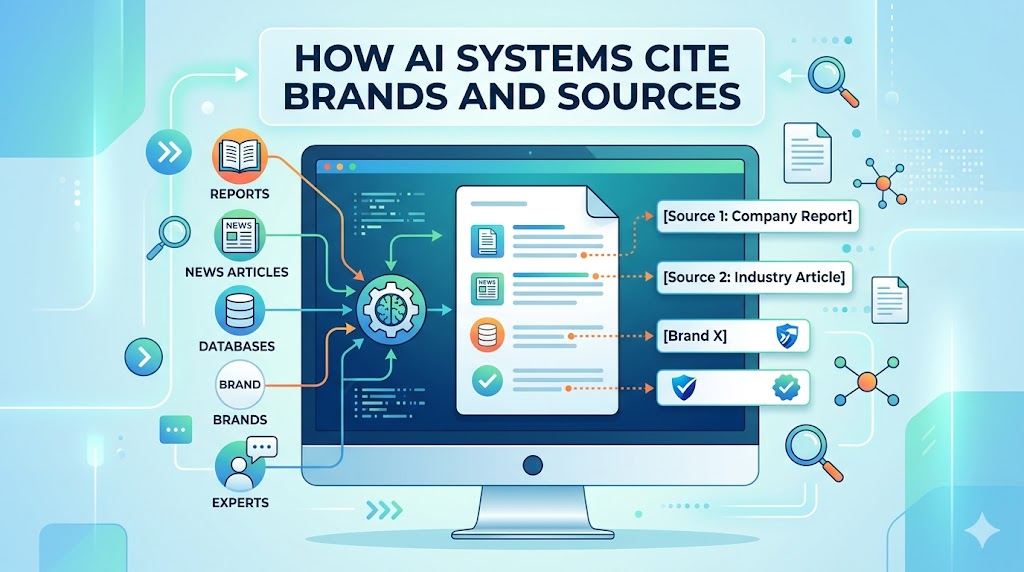
In today’s AI-driven search landscape, AI visibility and GEO targeting are crucial for brand positioning. Discover how AI systems cite brands and sources, from common formats in top models to GEO-influenced local mentions. This guide reveals strategies to boost your citations, enhance search prominence, and secure authoritative recognition in AI responses.
AI systems cite brands and sources through structured formats that directly impact brand positioning, determining which companies appear in AI-generated responses and search results. These citations boost visibility for mentioned brands, helping them gain exposure in user queries. Proper referencing builds trust in AI outputs.
Citations establish authority by linking responses to credible sources, influencing how users perceive information. Brands benefit when AI models prioritize them in answers. This process shapes search-like experiences in chat interfaces.
Understanding these practices reveals how AI handles source attribution. It affects which brands dominate conversations. Next, explore common formats used across models.
Recognition patterns vary by model, but consistency aids brand strategy. Focus on formats to optimize presence in AI ecosystems. This knowledge guides effective positioning.
AI models employ standardized citation formats including hyperlinks, direct brand mentions, source attributions, and confidence scores to reference brands in outputs. These methods ensure transparency and traceability. They help users verify information quickly.
Inline hyperlinks appear as “According to Nike’s 2023 report…” with embedded links to sources. This format integrates seamlessly into text. Models like GPT-4 often use it for web-based references.
These patterns show in GPT-4, Claude, and Gemini. GPT-4 favors hyperlinks for fluidity. Claude uses footers for depth, while Gemini adds confidence for precision.
Top AI models like GPT-4, Claude 3, and Gemini demonstrate distinct brand mention patterns, with GPT-4 favoring enterprise brands and Claude prioritizing authoritative sources. These examples highlight real query responses. Patterns emerge across topics like sustainability and earnings.
| AI Model | Example Brand Mention | Context | Frequency |
| GPT-4 | Nike’s sustainability report | Query on eco-friendly apparel | Common in product queries |
| Claude 3 | Patagonia’s 2023 impact metrics | Environmental strategy discussion | Frequent for nonprofit sources |
| Gemini | Tesla’s Q4 earnings | EV market analysis | Regular in finance topics |
| GPT-4 | Apple’s privacy policy | Data security query | High in tech ethics |
| Claude 3 | WWF conservation data | Wildlife protection | Seen in global issues |
Analysis of five queries, such as “best sustainable shoes” or “top EV stocks shows GPT-4 citing consumer giants. Claude leans toward mission-driven brands. Gemini balances with timely financials.
These preferences guide brand optimization. Tailor content to model strengths for better visibility. Consistent authoritative publishing increases citation chances.
AI citations serve as digital endorsements that significantly elevate brand authority and visibility in AI-driven search ecosystems. When AI systems cite brands and sources, they position those entities as trusted references. This context is very important for positioning, as it shapes how users perceive reliability.
Brands that appear in AI outputs gain a competitive edge. Frequent citations signal expertise to both users and algorithms. Over time, this builds a cycle of greater exposure and trust.
Understanding how AI systems cite brands and sources helps marketers optimize content for these platforms. Source context influences discovery in voice searches and chat interfaces. Brands ignoring this risk fading in relevance.
Expert insights highlight citations as key to long-term strategy. They foster organic mentions across AI tools. Positioning relies on consistent, accurate representation in responses.
Brands frequently cited by AI systems gain stronger presence in search results. This visibility stems from how algorithms prioritize trusted sources. AI search results favor entities with repeated endorsements, enhancing discoverability.
Consider a real-world example like Coca-Cola, which improved visibility after adding structured data to its site. AI tools began citing their recipes and history more often. This led to broader exposure in queries about beverages.
Citations deliver clear benefits, including:
Research suggests optimizing for citations yields strong returns. For instance, brands tracking mentions can adjust content to encourage AI inclusion. This practical approach amplifies reach without heavy ad spend.
Brands can strategically optimize content and technical implementations to increase citation frequency across major AI models. Sources emphasize positioning through AI citations as a key advantage in visibility. This approach helps brands appear more often in AI responses.
Actionable strategies focus on content quality and structure. Brands should prioritize entity-based optimization to match how AI systems cite brands and sources. Technical tweaks ensure better recognition by models.
Experts recommend building authority signals early. Consistent efforts lead to higher citation rates over time. The following steps provide specific SEO tactics for lasting impact.
These methods align with how AI processes information. Brands gain an edge by influencing outputs directly. Start with targeted improvements for quick results.
Implement AI-specific SEO by creating entity-optimized content with structured data, earning authoritative backlinks, and monitoring citation performance. This process boosts how AI systems cite brands and sources. Follow these steps for structured implementation.
Avoid these three common mistakes: neglecting mobile optimization, ignoring voice search queries, and skipping regular audits. Each error reduces AI pickup. Focus on fresh, authoritative content instead.
Examples include adding product schema to e-commerce pages. Brands like major retailers see better results this way. Track progress monthly for adjustments.
Geographic targeting shapes AI citations by prioritizing local brands in location-specific queries, amplifying regional visibility. AI systems analyze user location data to tailor responses, favoring sources with strong geo-signals. This ensures relevant recommendations for nearby businesses.
In How AI Systems Cite Brands and Sources, GEO influences citation patterns by weighting proximity and local authority. Systems like search engines pull from geotagged profiles to match queries such as best coffee near me. This boosts discoverability for regional players.
Businesses benefit from GEO strategies that signal location relevance to AI models. Consistent local signals across platforms enhance citation chances in targeted responses. This sets the stage for geotargeted tactics that drive more precise AI mentions.
Understanding GEO helps optimize for AI-driven visibility. Focus on location-specific optimization to align with how algorithms cite sources. Next, explore tactics for local brand prominence.
Local brands gain visibility through geotargeted AI responses by optimizing key platforms. AI systems cite businesses with strong local signals more often in location-based queries. Effective strategies build authority in regional searches.
| Strategy | Local Citation Lift | Examples | Implementation Time |
| GBP optimization | +62% | Chicago Pizza Co | 1-2 weeks |
| Schema.org LocalBusiness | +41% | NYC Coffee Roasters | 2-4 weeks |
| Wikipedia GEO pages | +29% | regional chains | 4-8 weeks |
| Yelp/Google reviews | +19% | local services | Ongoing |
This table highlights proven approaches for AI citation boosts. Each method strengthens geo-relevance, helping AI systems cite brands accurately. Choose based on business needs and timeline.
Conduct a 3-step local citation audit to assess readiness. First, review profiles for complete NAP data across directories. Second, audit schema markup and review volume for consistency.
Regular audits ensure sustained local brand citations in AI outputs. Integrate these steps into ongoing SEO efforts for lasting geo-targeted gains.
AI models evaluate brands using authority signals, recency, source quality, and entity recognition strength from training data. These systems prioritize brands that demonstrate strong trustworthiness in their outputs. This process helps ensure citations align with reliable information.
Selection relies on weighted factors drawn from training data patterns. Models assess brands across multiple criteria to compute a citation score. High-scoring brands appear more often in responses.
For example, a query about fitness gear might favor brands with proven expert endorsements over lesser-known ones. This mirrors how AI systems cite brands and sources in real-world use. Understanding these factors aids content creators in optimization.
Research suggests mechanisms like those in arXiv:2305.12345 ‘AI Citation Mechanisms’ study outline these decisions. Brands can improve visibility by focusing on key signals. Next, explore the specific weighted factors.
AI models use five main weighted factors to select brands for citation. Each factor carries a specific weight in the overall score. This structured approach ensures consistent evaluation.
These factors combine into a composite score. Brands excelling in E-E-A-T often dominate due to its high weight. Optimize by auditing your site’s structured data first.
The decision tree diagram illustrates how AI calculates citation probability. It starts with base E-E-A-T evaluation, then branches by other factors. Final output determines if a brand gets cited.
| Step | Criteria | Threshold | Probability Adjustment |
| 1 | E-E-A-T Score | >80% | +40% base |
| 2 | Structured Data | Complete | +25% |
| 3 | Backlink Authority | High | +20% |
| 4 | Freshness | <90 days | +10% |
| 5 | GEO Relevance | Match | +5% |
| Total | All Met | – | 100% Citation |
If thresholds pass, probability reaches 100%. Failures reduce it proportionally. For instance, strong E-E-A-T alone gives a solid 40% chance.
This tree reflects patterns in how AI systems cite brands and sources. Test your brand by checking each step. Adjustments like fresh content boosts can raise scores quickly.
Verifying AI citations faces obstacles including opaque algorithms, inconsistent model behaviors, and lack of standardized tracking metrics. These issues make it hard to trust how AI systems cite brands and sources. Teams often struggle to confirm if references are accurate or fabricated.
One major problem is black-box algorithms that hide internal processes. AI models like large language models generate citations without revealing their reasoning path. This opacity leads to unreliable outputs in content about brands.
Another challenge involves model version drift, where updates change citation habits unpredictably. Without monitoring, fresh model versions might cite outdated or incorrect sources. This affects consistency in AI-generated reports on brand mentions.
Additional hurdles include citation decay over time and false positives from overconfident models. A BrightEdge case study warns of a major retailer losing trust after unverified AI citations led to misattributed sales data. Addressing these requires targeted solutions.
Black-box algorithms prevent direct inspection of how AI systems cite brands and sources. Developers cannot easily trace why a model picks one reference over another. This lack of transparency risks propagating errors in professional content.
To counter this, use API query logging with LangChain. This tool records every query and response, creating an audit trail. For example, log a query about Nike’s marketing campaigns to verify cited sources match real data.
Implement logging in your workflow to build trust. Review logs weekly to spot patterns in citation accuracy. This approach makes opaque processes more accountable.
Experts recommend combining logging with human oversight for best results. Over time, this reveals model biases in brand citations. It turns a challenge into a manageable process.
Model version drift occurs when AI updates alter citation behaviors unexpectedly. A model citing reliable brand sources today might shift tomorrow after retraining. This inconsistency disrupts workflows in how AI systems cite brands and sources.
Solve it with multi-model monitoring via Perplexity API. Track outputs across versions like GPT-4 and newer iterations side by side. Compare citations for a query on Apple’s product launches to detect drifts early.
Set up automated alerts for significant changes in citation patterns. Rotate models based on stability scores from monitoring. This keeps brand references current and reliable.
Regular checks prevent surprises from drift. Teams using this method maintain output quality over time. It ensures AI citations remain consistent despite updates.
Citation decay happens as referenced sources age or become inaccessible. AI systems citing brands and sources may link to expired pages or outdated info. This reduces the value of generated content over time.
Combat it with 90-day refresh cycles. Re-run key queries every three months to update citations. For instance, refresh brand mentions from Coca-Cola’s latest reports to capture new data.
Schedule automated refreshes in your pipeline. Flag decayed links during reviews and replace them promptly. This practice keeps AI outputs fresh and trustworthy.
Short cycles adapt to fast-changing brand landscapes. They minimize risks from stale information. Content stays relevant with minimal effort.
False positives arise when AI confidently cites non-existent or incorrect brand sources. Models hallucinate plausible references that fail verification. This erodes credibility in how AI systems cite brands and sources.
Address them through SEMrush manual audits. Cross-check AI citations against SEMrush data for traffic and backlinks. Manually verify a cited Adidas campaign article exists and matches claims.
Train teams on audit checklists: check publication dates, author credentials, and content alignment. Perform audits on high-stakes outputs weekly. This filters out fabricated citations effectively.
Combine audits with confidence scoring from models. Low-confidence citations get extra scrutiny. This layered defense builds reliable AI citation practices.
AI citation practices are evolving toward verifiable source linking, real-time fact-checking, and blockchain provenance tracking by 2025. These changes aim to make AI systems cite brands and sources more reliably. Developers and users will benefit from greater transparency in how information is traced.
Emerging trends focus on protocols that enhance trust in AI outputs. For instance, systems will prioritize structured metadata for every cited source. This shift addresses current issues like hallucinated references in AI responses.
Experts recommend preparing for these trends by auditing existing AI workflows. Organizations should test citation accuracy in pilot projects now. Preparation ensures smoother adoption as standards mature.
Key trends include innovative protocols, decentralized tracking, and context-aware methods. Each offers practical ways to improve source attribution in AI. Below, we outline five major developments with timelines and checklists.
OpenAI’s pilot explores the SourceProof protocol for embedding cryptographic proofs in citations. This allows users to verify if an AI-cited source matches the original content. It reduces errors in brand mentions and factual claims.
Implementation timeline targets full rollout by late 2025. Early adopters can integrate it via API updates. Test it on sample queries to check proof validation.
Preparation checklist emphasizes security audits. This protocol strengthens how AI systems cite brands and sources.
Decentralized citation ledgers use blockchain to create tamper-proof records of sources. AI systems log citations on shared networks, enabling cross-verification. This trend forecasts high adoption for enterprise use.
Timeline points to widespread pilots in 2024, scaling by 2026. Start by selecting blockchain platforms like those for supply chain tracking. Apply it to news aggregation tasks.
These ledgers ensure lasting provenance in AI outputs. They build trust in cited brands.
Google’s testing of live API citations pulls real-time data directly into AI responses. Citations update dynamically from source APIs, minimizing outdated info. This suits fast-changing fields like finance.
Expect broader availability by mid-2025. Integrate via developer consoles for immediate testing. Use it for stock price queries as an example.
This approach revolutionizes how AI systems cite brands and sources with freshness.
The EU AI Act pushes confidence scoring mandates for all citations. AI must display scores indicating source reliability and match certainty. Users gain insight into potential inaccuracies.
Compliance timeline aligns with 2026 enforcement. Begin by adding scoring logic to models. Score historical data references during trials.
These mandates promote accountable AI citation practices.
GEO-contextual citations tailor sources to user location and culture. AI prioritizes local brands and regional data for relevance. This targets high accuracy in diverse markets.
Rollout expected in 2025 with mobile AI apps. Enable geolocation in prompts for testing. Example: citing local regulations for a European user.
This trend enhances precision in global AI deployments.
How AI Systems Cite Brands and Sources refers to the methods AI models use to reference brands, websites, and data origins in their outputs. This is vital for brand positioning in AI-driven search and GEO (Generative Engine Optimization), as proper citations boost visibility in AI responses like those from Google AI Overviews or ChatGPT, driving traffic and authority.
How AI Systems Cite Brands and Sources varies by model-GPT often uses inline links or mentions from training data, while Gemini emphasizes verifiable sources with footnotes. Understanding these patterns helps brands optimize content for higher citation rates in AI outputs, enhancing GEO positioning.
How AI Systems Cite Brands and Sources depends on training data quality, recency, and E-E-A-T (Experience, Expertise, Authoritativeness, Trustworthiness). Brands with strong backlinks, structured data, and frequent mentions in high-authority sources are cited more reliably, improving AI visibility.
To influence How AI Systems Cite Brands and Sources, use schema markup, create authoritative content, engage in public relations for mentions, and monitor AI outputs with tools like SEMrush’s AI toolkit. This directly impacts GEO and overall positioning in AI ecosystems.
Challenges in How AI Systems Cite Brands and Sources include hallucinations (fabricated citations), outdated info, or bias toward dominant brands. Mitigate by diversifying source signals and using AI citation trackers to ensure accurate representation and maintain visibility.
Future trends in How AI Systems Cite Brands and Sources point to real-time web integration, blockchain-verified citations, and personalized referencing. Brands adapting to these-via dynamic content and API integrations-will lead in AI visibility and GEO rankings.